


Projects
CloudEdge Fusion Project

- PI : TOMOHIRO, Kudo
- Period : FY2022-FY2027
- Outline :
Formal verification methods have been studied as a method to mathematically verify whether the system works as expected, and have been used to verify various systems. This study aims to establish a formal verification method to mathematically and strictly verify whether the risk response of the machine learning utilization system can be implemented. In particular, we will build a technology that automatically verifies the inadequacy of the risk response of the machine learning use system, and aim to improve the quality of products and services based on machine learning.
- Related research groups : Continuum Computing Architecture Research Group,Continuum Computing Trustworthiness Research Group,Data Platform Research Group
- External cooperation : SoftBank Corp., Keio University, Osaka University, Toyohashi University of Technology, Tokyo University of Science and Technology, University of Tokyo, University of Tsukuba, Kyoto University of Technology and Textile, Space Service Innovation Lab Business Cooperative, Izuma Networks Inc.
Research and development on the utilization of various AI semiconductors and highly efficient computing resources

- Participants : National Institute of Advanced Industrial Science and Technology, 1FINITY Ltd., AI Fukushima Co., Ltd., ELEMENTS Co., Ltd., Fujitsu Limited, TEPCO Systems Corp., RUTILEA Inc., Zeureka Inc.
- Overview : To advance the domestic computing infrastructure that supports the development and supply capacity of AI, we will research and develop technologies that evaluate a variety of AI semiconductors and realize high-efficiency computing resources. We will establish a testbed consisting of multiple emerging AI semiconductors that are expected to offer high performance and low power consumption, and conduct multifaceted evaluations of their performance, energy efficiency, usability, operability for AI development, as well as clarify utilization guidelines according to the application. In addition, to improve the efficiency of computing resources, including these AI semiconductors, we will develop a tool for AI workload execution performance prediction and high-efficiency, high-performance inference systems.
Development of hybrid cloud utilization infrastructure technology and route characteristic guarantee cloud network technology
- PI : OIWA, Yutaka
- Period : July 2023 - July 2026
- Outline :
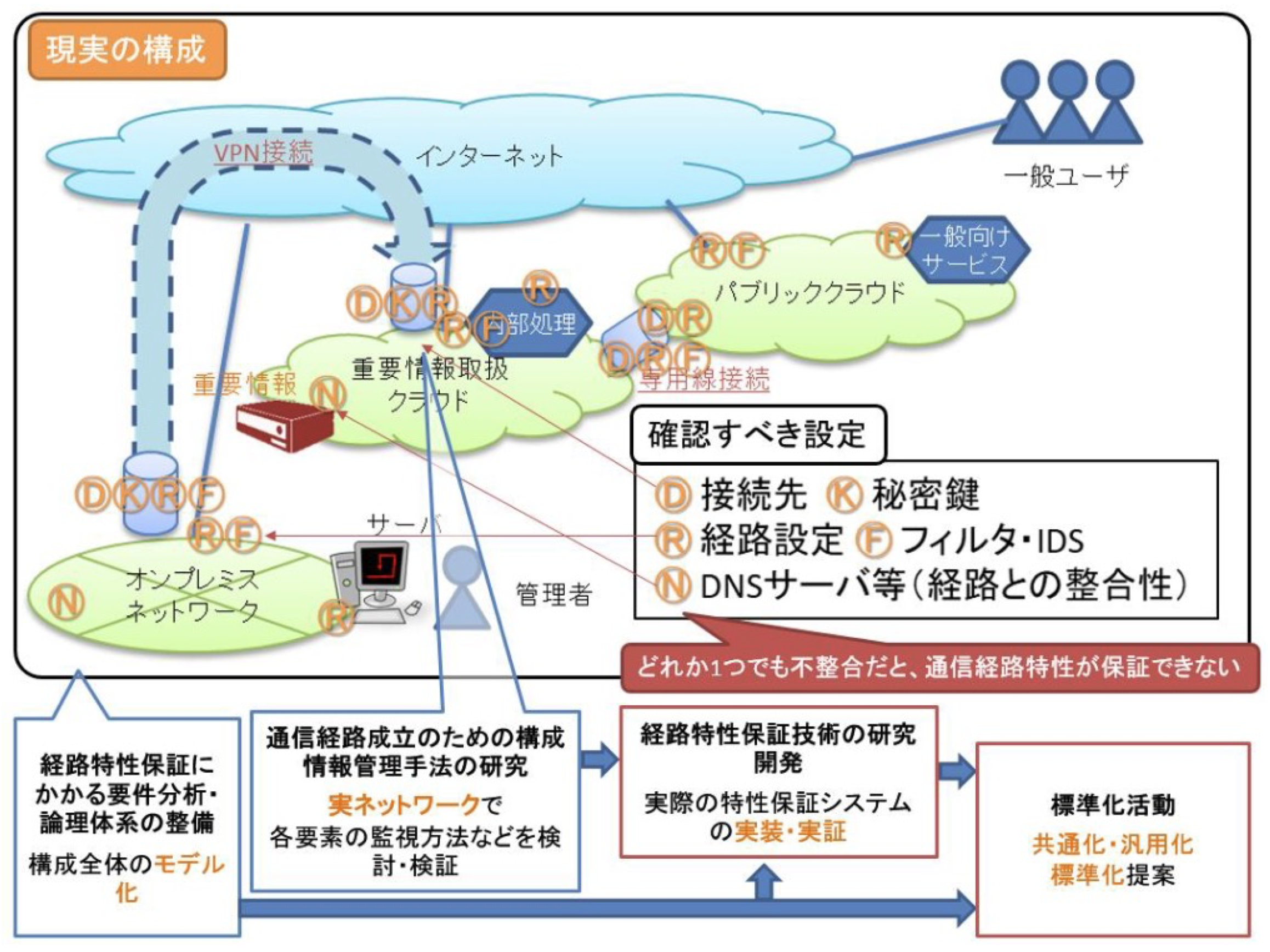
Develop a communication path characteristic collateral technology that guarantees the route characteristics of communication inside the system, detects unintended degrading, etc., and alarms and deterrences in a hybrid cloud system that connects multiple cloud infrastructures and internal networks with wide-area communication between data centers and bases.
- External cooperation : Co-researcher : Internet Initiative Japan Inc.
NEDO Consignment Business "Research and Development on AI Safety Enhancement"
- PI : OIWA, Yutaka
- Period : April 23, 2025 - March 31, 2026
- Outline :
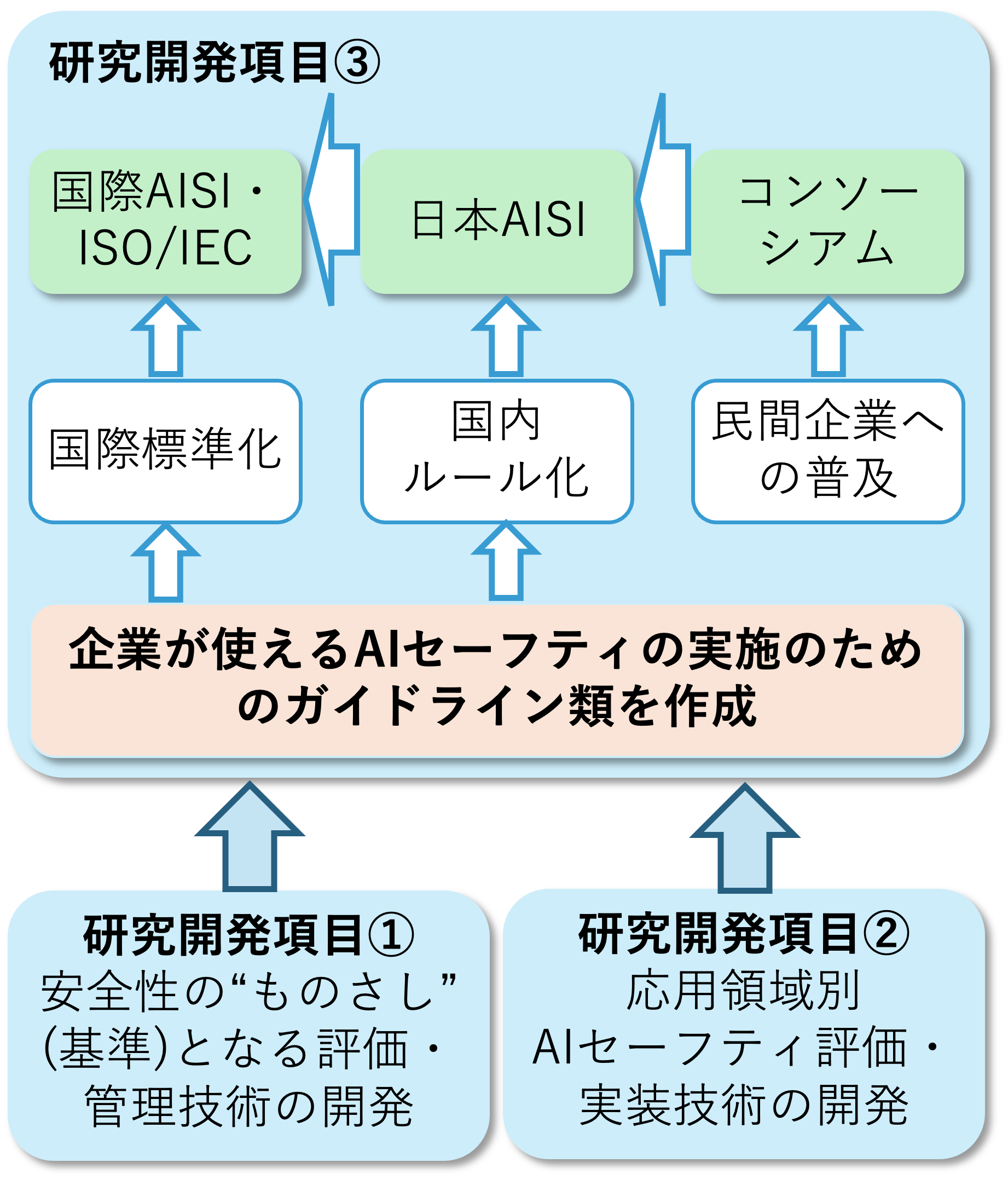
We will carry out AI safety standard creation and research and development as an integrated initiative. The research and development items are as follows.
- Data, learning model, AI system safety evaluation and management infrastructure technology
- AI safety evaluation and implementation technology for AI products and services in the "living area"
- AI safety guidelines, implementation explanations, and international standardization
- Related research groups : Continuum Computing Trustworthiness Research Group, Geoinformation Service Research Group, Data Platform Research Group. Jointly conducted with the Artificial Intelligence Research Center, the Intelligent System Research Department, and the Cyber Physical Security Research Department
- External cooperation : NEDO consignment business. ( Citadel AI Co., Ltd. and Co., Ltd. jointly entrusted 3. Re-consignment 1 and 2 to the University of Tokyo, Ryukyu University, Nagoya University, and Tokyo University of Science.
Form verification technology for risk analysis of machine learning systems

- PI : KAWAMOTO, Yusuke
- Period : 2025-2028
- Outline :
Formal verification methods have been studied as a method to mathematically verify whether the system works as expected, and have been used to verify various systems. This study aims to establish a formal verification method to mathematically and strictly verify whether the risk response of the machine learning utilization system can be implemented. In particular, we will build a technology that automatically verifies the inadequacy of the risk response of the machine learning use system, and aim to improve the quality of products and services based on machine learning.
- Related research groups : Continuum Computing Trustworthiness Research Group
- External cooperation : (Scheduled to be published at a later date)
Construction of a formal foundation that supports the verification of physical and probabilistic systems
- PI : Affeldt Reynald
- Period : 2022-2025
- Outline :
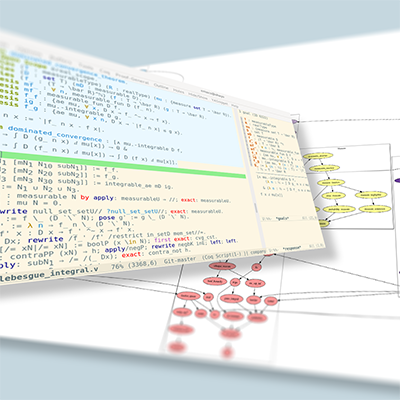
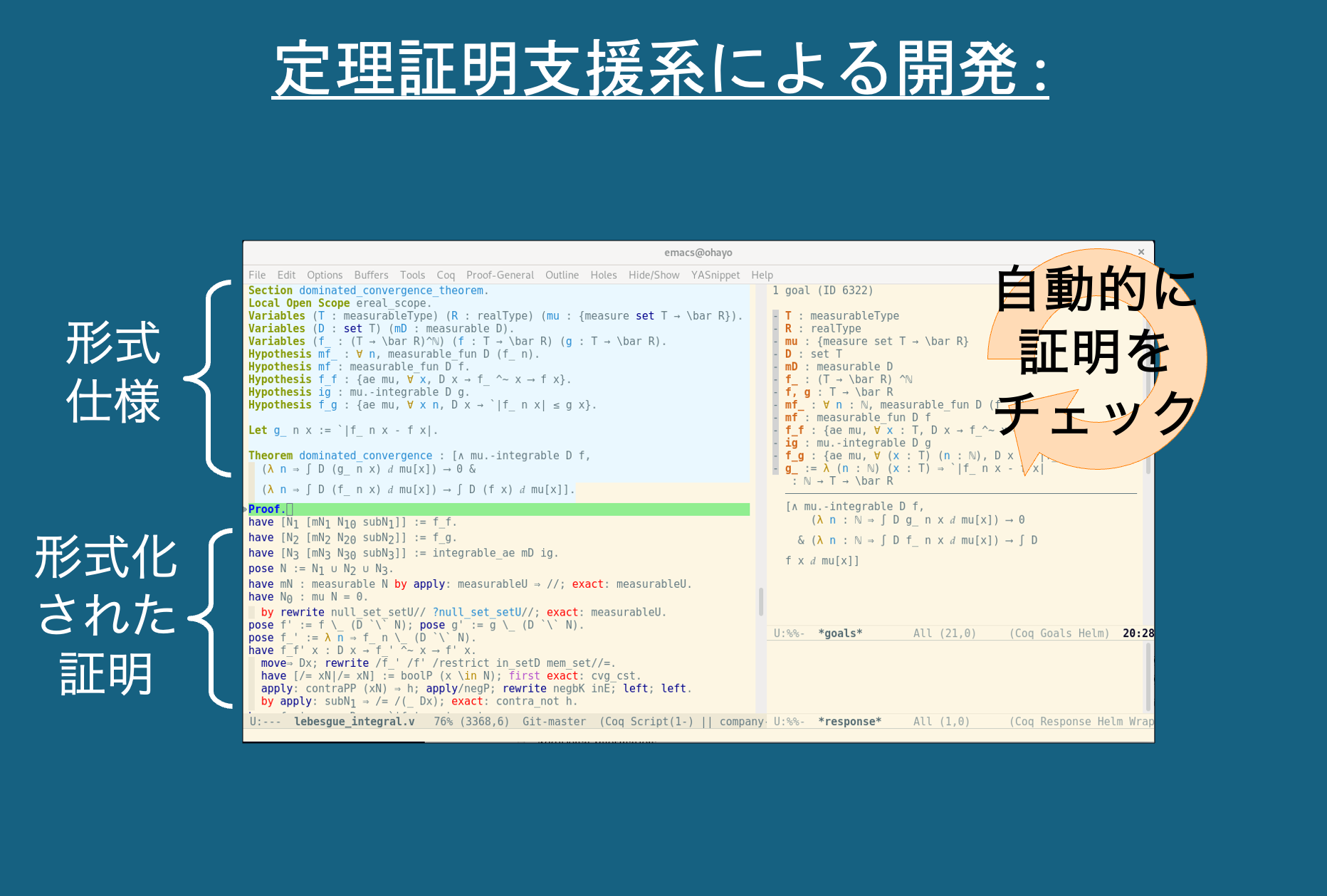
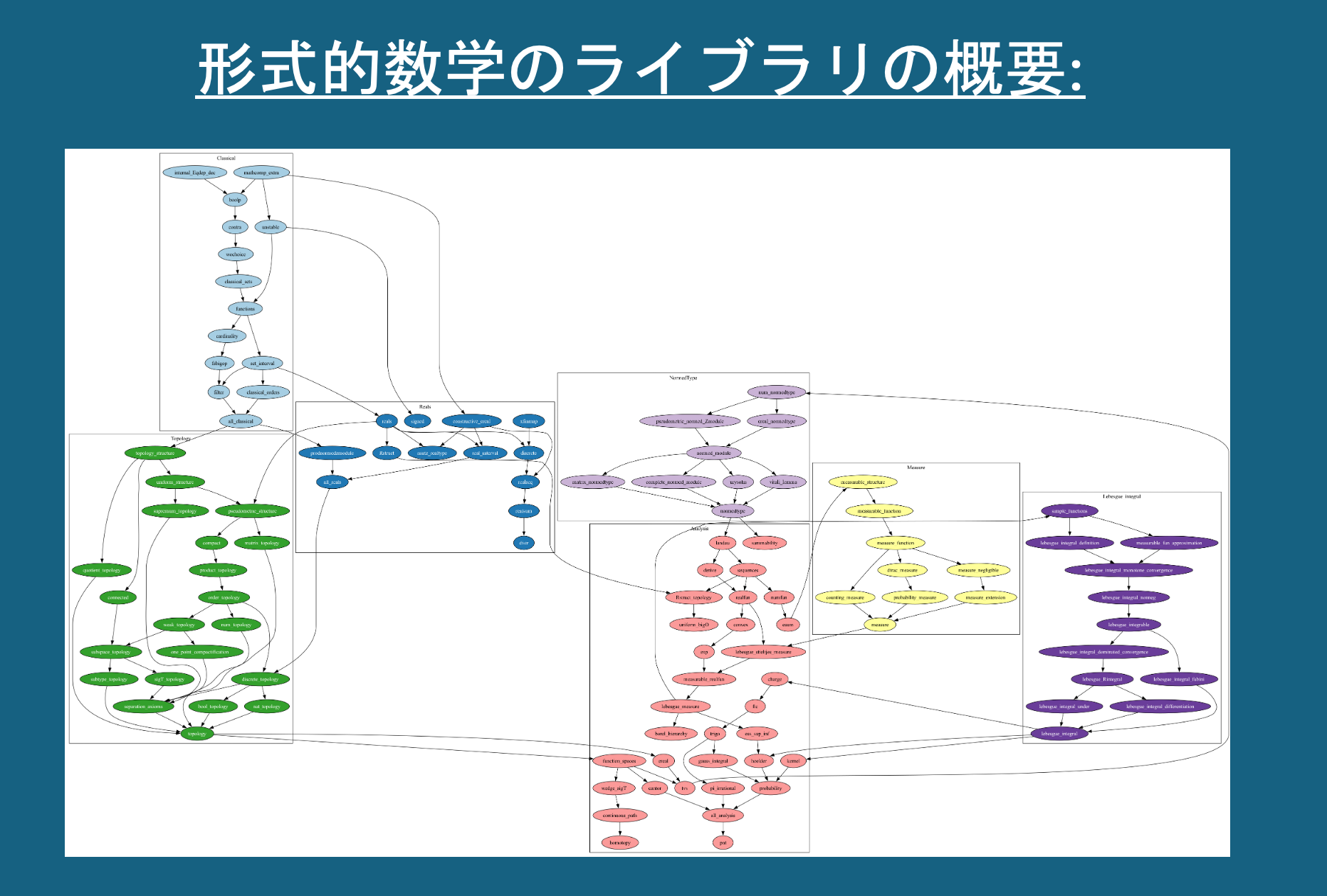
Today, computer programs, in addition to the manipulation of digital information and their networks, interact with the outside world, for program verification, not only formal logic and discrete mathematics, but also real analysis, probability theory, geometry, etc. Learning is necessary, and it is difficult to rigorously verify the various side effects of the program. To reduce its complexity, both a fundamental study of the semantics of the program and an integrated study that gives a consistent formal expression to advanced mathematics are necessary. In this study, on the theorem proof support system Rocq, real analysis, continuous probability, rigid geometry are formalized, and based on monad and equation reasoning, the formal foundation is constructed and evaluated.
- Related research groups : Continuum Computing Trustworthiness Research Group
- External cooperation: Nagoya University, Kyoto Sangyo University, Tohoku University, Kyushu University